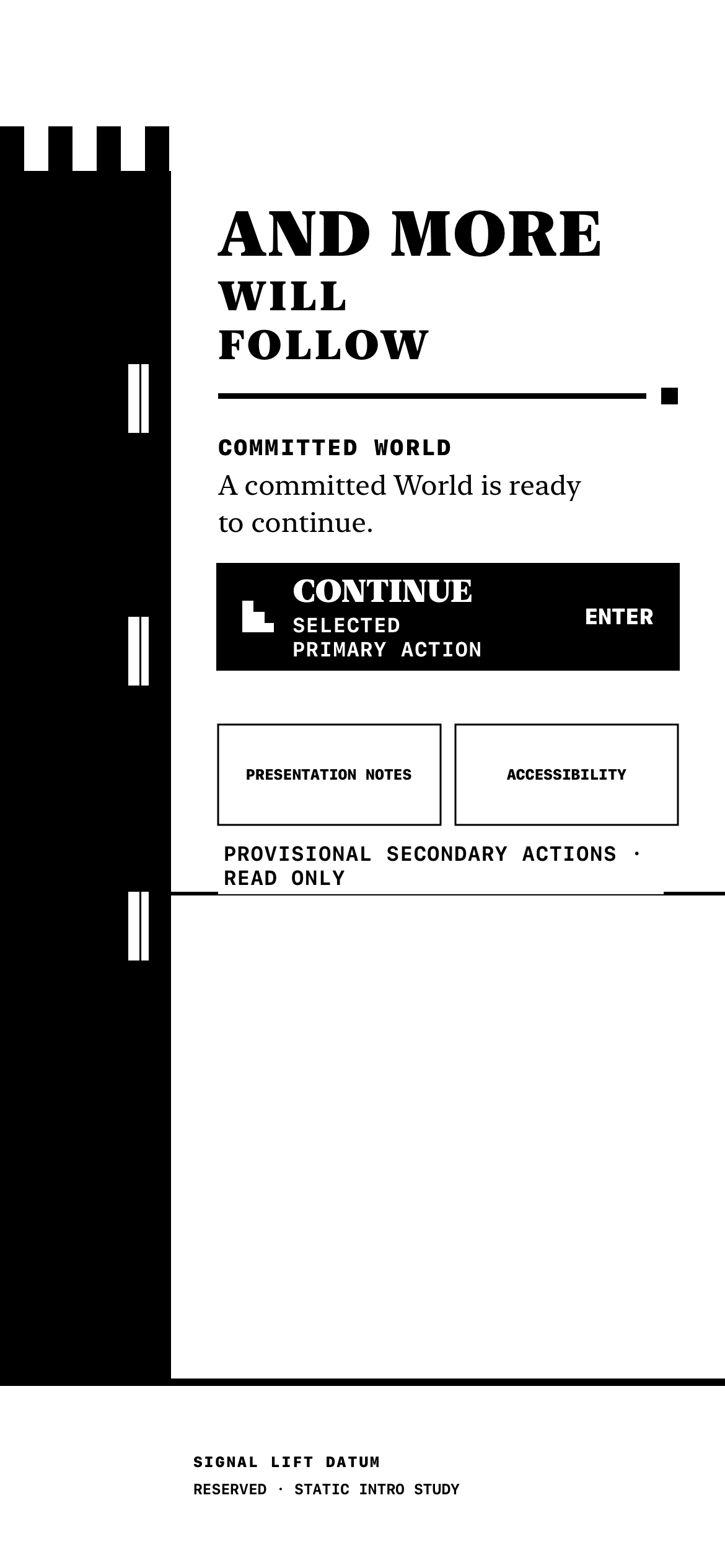
And More Will Follow
A deterministic tile-to-idle-city game with a heap-free portable C simulation and native Swift shells for iPhone and Apple Watch.
- Status
- In development
- Stack
- Game · Incremental · Puzzle · C · Swift · iOS
- Studio
- Published by KnownBetter Studios; this page is the engineering case study.
At a glance
- Outcome: Plays deterministic 2048-style tile boards that feed an idle City. See the product page and release plans.
- Status: Pre-alpha. The iPhone app and its read-only Apple Watch companion run on Simulator and ran on the owner’s phone and Watch on September 6, 2026. Signed builds, the Android and desktop shells and the Arcane Projection’s Spells and Duels are coming; a first release is targeted for late 2026.
- Dates: January 2026–present. The native C11 codebase dates from August 28, 2026.
- History: Began in January 2026 as Multiplicity, a Godot project where I wrote a substantial share of the GDScript across 456 commits. Renamed And More Will Follow on August 12, 2026, then rebuilt in C11 with native Swift shells, growing out of the ambient world built for Corne Arcane and its companion apps.
- Role: Designed the architecture, contracts, save and render rules and tests solo; reviewed and debugged AI-assisted code.
- Stack & libraries: C11/CMake, SwiftPM/SwiftUI, iOS 16/watchOS 10. No engine.
And More Will Follow combines 2048 with an idle game. You play a wizard in a tower, sliding and merging tiles on a 4x4 board. A good round earns Parts. Parts buy upgrades, rebuild the city below so it keeps producing while you’re away, and build clockwork helpers called Automata. The Automata take over the work and eventually become the city’s people. Every run starts from a seed, and the same seed always plays out the same way.
When the city is ready, you can finish a Proof. The board, your Parts and the city’s buildings reset, but you keep your Chips, your Plans and your Remnants. The Forgetting resets almost everything and may leave you one Remnant, a hand-designed bonus that carries into the next world. Events in the world also drive spells and duels on screen, which you influence but never cast.
The game started in Godot under the name Multiplicity, with a finished core loop, six machines, resets and 106 tests. The native version is a from-scratch rebuild in C, modeled on my Corne Arcane keyboard project. That project runs its city and spell duel as a small C simulation. The same C code also runs as a desktop app, in a browser and on iPhone and Apple Watch. This game targets iPhone, Watch, a two-screen Android handheld and desktop from one shared world. No Godot code, art or data carried over. The parts worth keeping were rebuilt and retested in C. The keyboard project contributed its overall design but none of its code. The tradeoff: a finished Godot game was set aside. Each platform now needs its own small app around the game, where Godot exported to each one automatically.
The rules come out exactly the same on every device. They’re written in plain C that uses a fixed amount of memory and never asks for more. Parts are counted with numbers up to 2,048 bits long. Results match byte for byte on Linux, in the iPhone simulator and on a real phone. The iPhone and Watch apps only handle the screen, touch and accessibility. The Watch gets a read-only snapshot of the city under 512 bytes. Saves are never edited in place. Each save is written as a new copy and read back to check it before the game confirms it. Tests cut off every save partway through to prove a crash can’t reset your progress. Everything is drawn in black-and-white pixel art that stays readable without color.
The board, upgrades, city, Automata, Proof, Forgetting and six Remnants all work in an iPhone app with a read-only Watch companion. Next up: signed builds, Android and desktop versions, and the spells and duels.
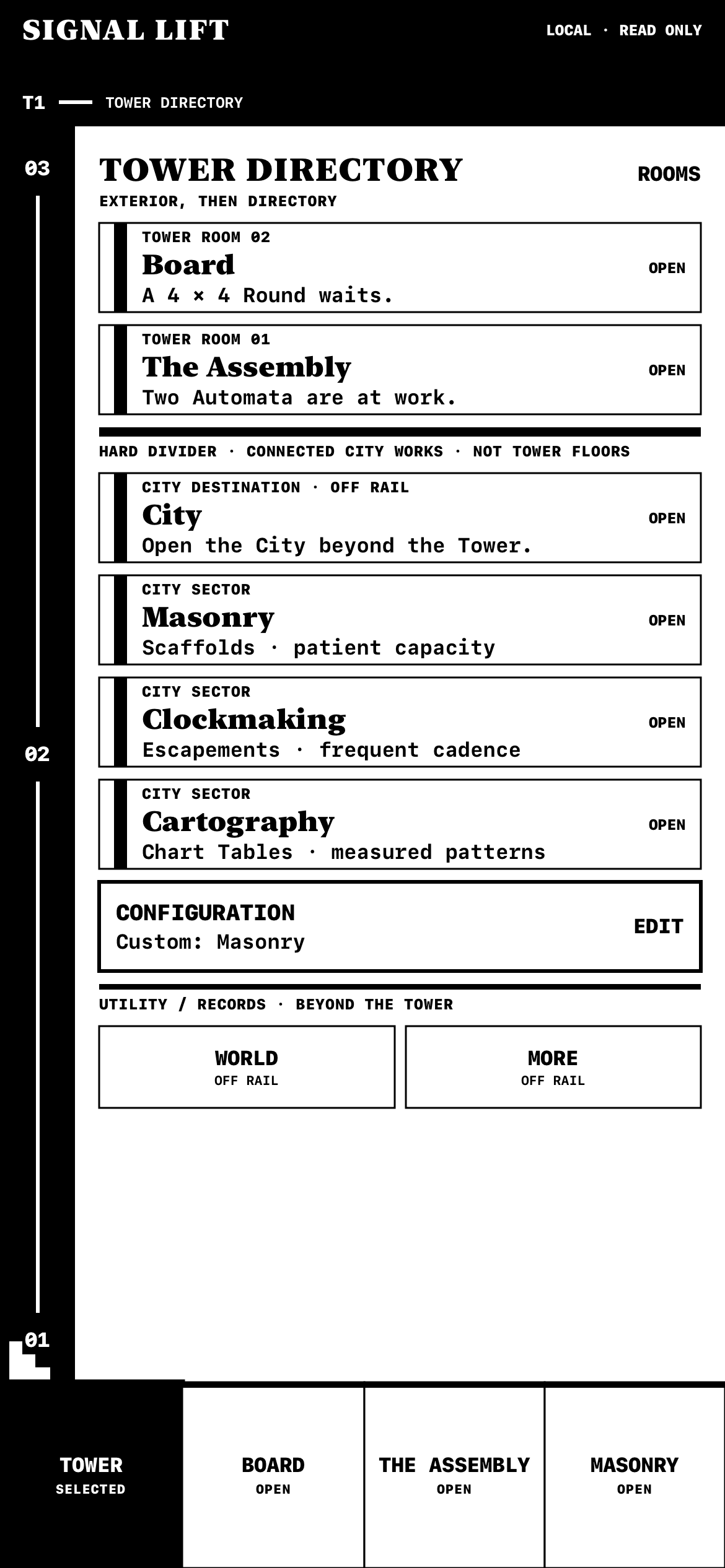
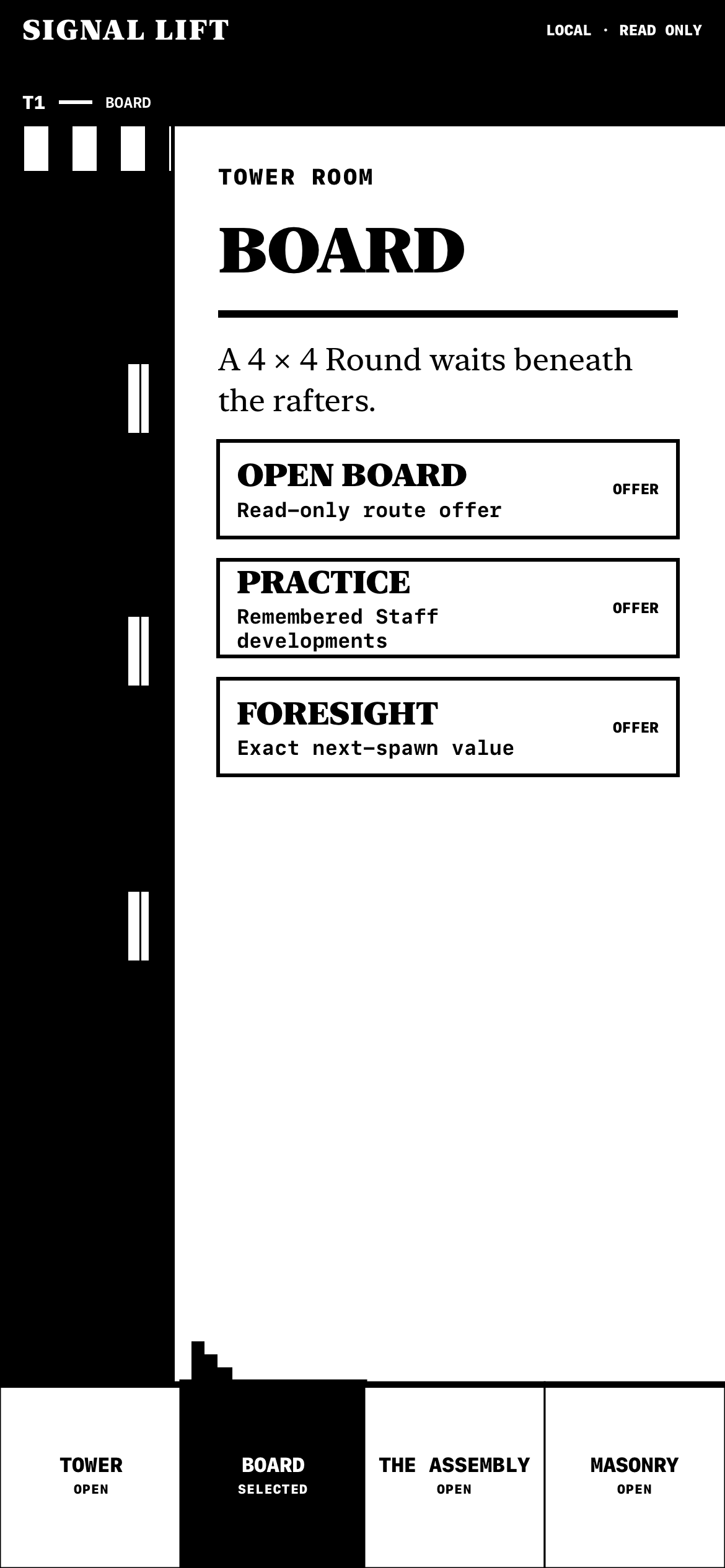
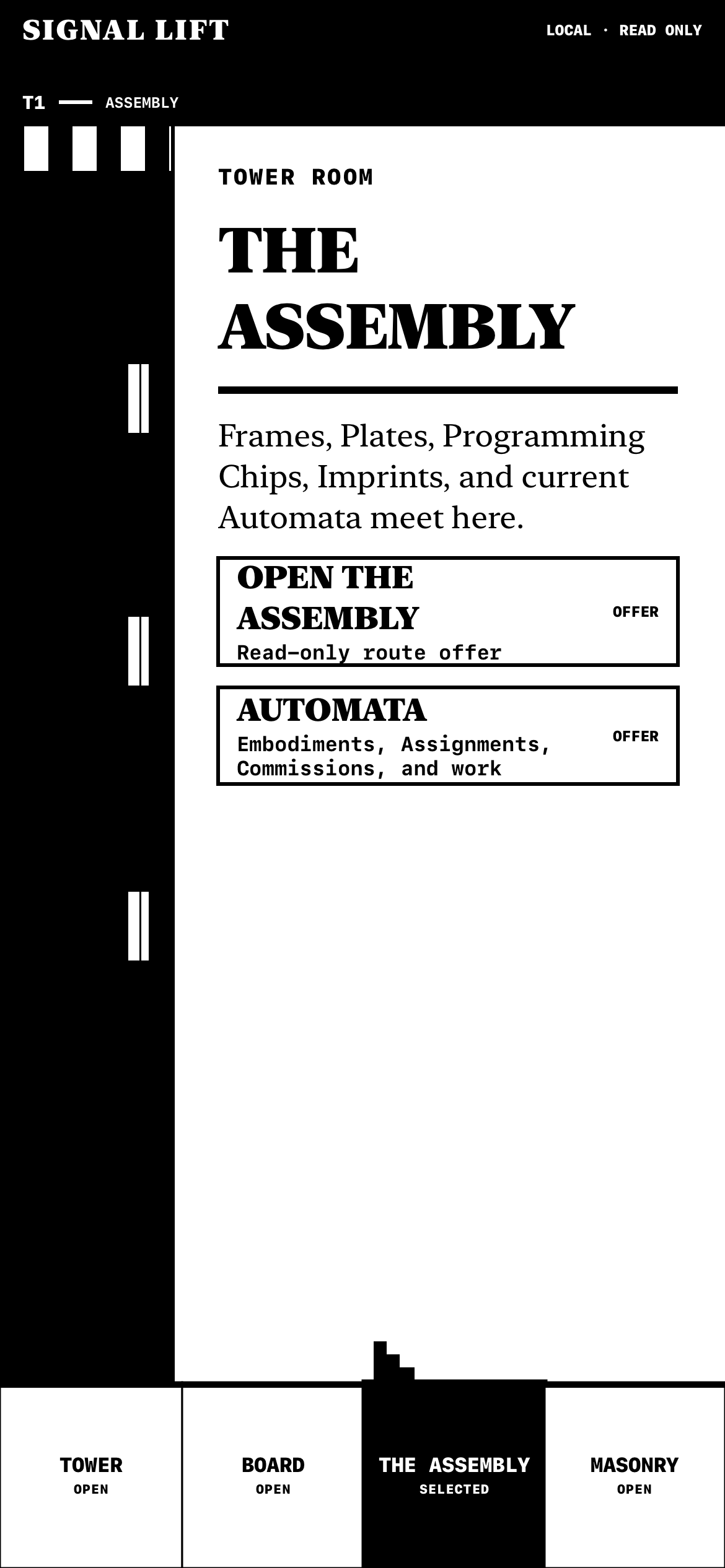
NATIVE INTERFACE STUDIES